

Leash training is one of the most important foundations you can build with your puppy. Whether you’re strolling through your neighborhood or heading out for a hike, a dog who can walk calmly on leash makes life easier—and a lot more enjoyable—for everyone.
As a dog trainer in York, PA, I see many puppy guardians feeling overwhelmed when their adorable new companion turns into a leash-pulling whirlwind. The good news? With the right approach, leash training doesn’t have to be stressful. In fact, it can be a fun bonding experience rooted in reward-based, positive reinforcement training.
In this guide, we’ll break down puppy leash training into five clear, manageable steps so you can set your puppy up for long-term success.
Step 1: Start with the Right Equipment
Before you even clip on the leash, it’s important to set yourself up with the right tools. The goal of puppy training is to create positive associations, not discomfort or fear.
For most puppies, you’ll want:
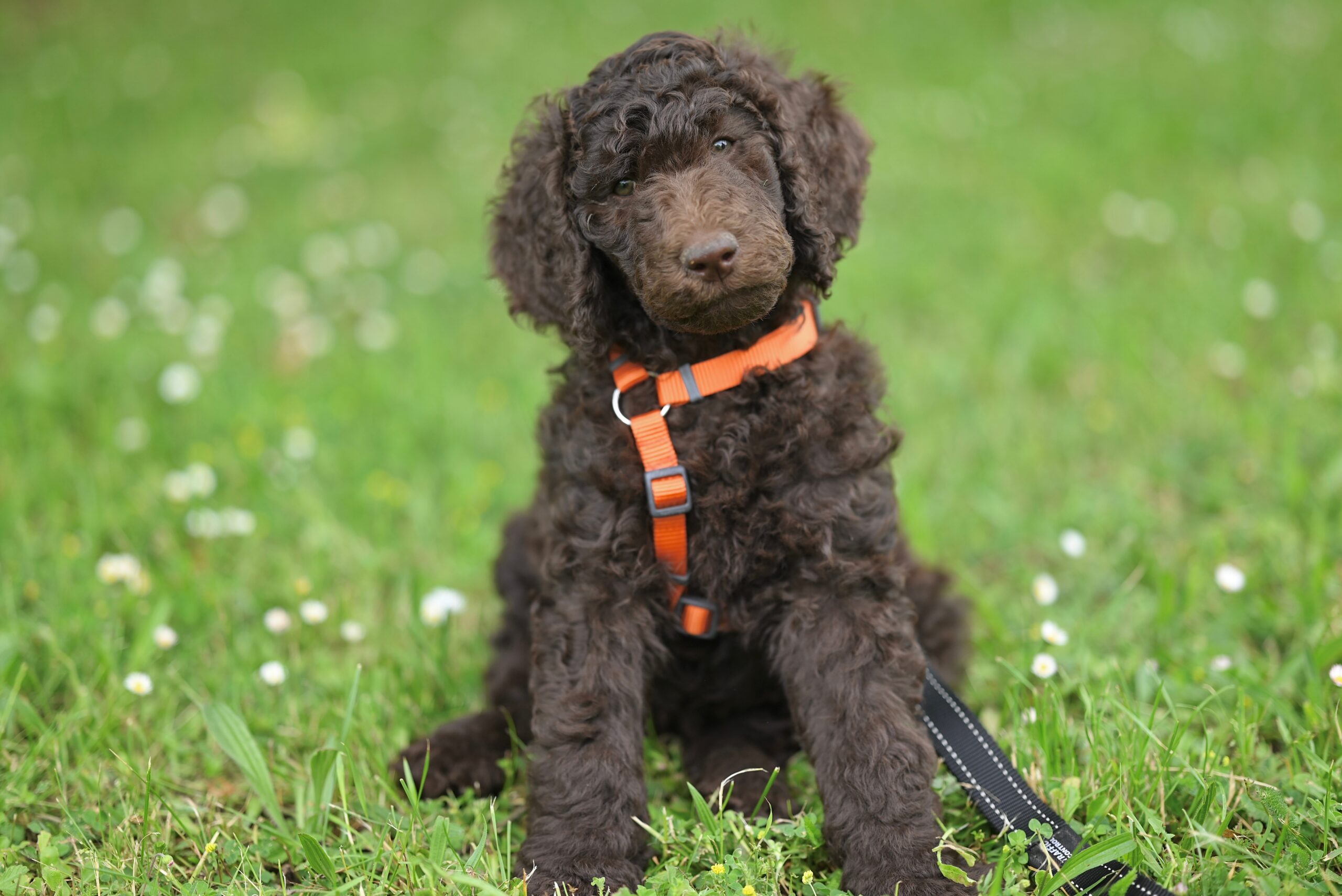
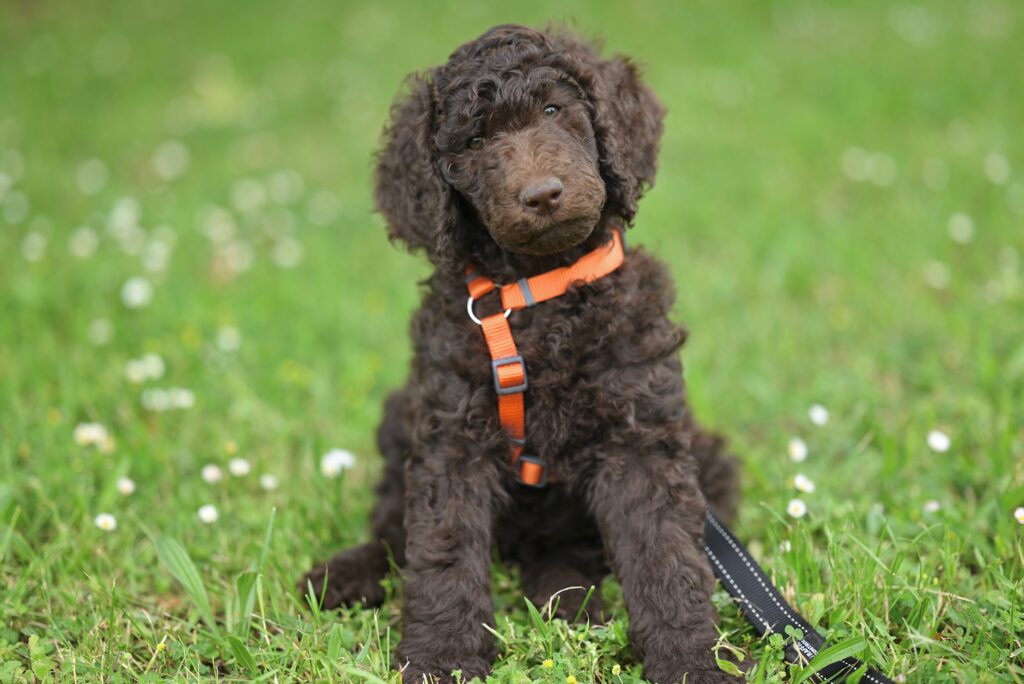
- A well-fitted Y-shaped harness or collar
- A lightweight leash (6 feet is ideal to start)
- High-value treats your puppy loves
- An easy-to-use wearable treat pouch
Avoid equipment that relies on punishment or discomfort. Reward-based training is far more effective and helps build trust between you and your puppy.
Let your puppy explore their collar or harness first. Put it on for short periods indoors and reward calm behavior. This helps prevent the “freeze and flop” response many puppies have when wearing gear for the first time.
Once your puppy is comfortable, attach the leash and let them drag it around under supervision. This step helps them get used to the sensation without pressure.
Step 2: Build Positive Associations with the Leash
One of the biggest mistakes people make is jumping straight into walking outside. For a puppy, the world is already overwhelming—new sights, sounds, smells, and experiences everywhere.
Instead, start indoors or in a quiet, familiar environment.
Here’s how:
- Clip the leash on and reward your puppy immediately
- Take a few steps and reward them for following you
- Keep sessions short (1–3 minutes to start)
- Use a cheerful tone and lots of encouragement
The goal is simple: teach your puppy that being near you and moving with you leads to good things.
This is where positive reinforcement begins. Every time your puppy chooses to walk near you, they earn a reward. Over time, that behavior becomes their default.
If your puppy bites the leash or gets distracted, don’t worry—that’s normal. Stay calm, redirect with treats, and keep things light.
Step 3: Teach Your Puppy to Follow You
Loose leash walking starts with one core concept: your puppy learns that staying close to you is rewarding.
Begin by walking in random patterns indoors or in your yard:
- Change directions frequently
- Reward your puppy for staying with you
- Keep your movements unpredictable (in a fun way!)
This teaches your puppy to pay attention to you instead of forging ahead.
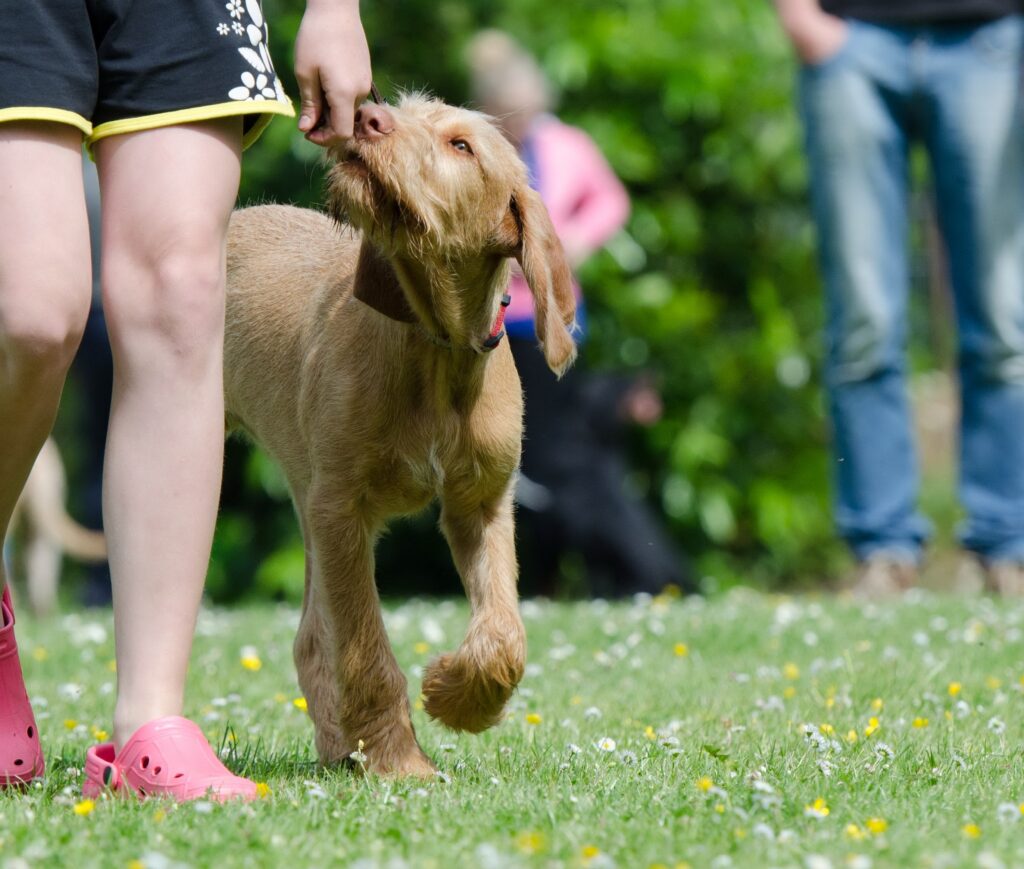
A helpful tip from my work as a dog trainer in York PA: think of yourself as the most interesting thing in the environment. Your energy, movement, and rewards should make your puppy want to follow you.
If your puppy pulls ahead:
- Stop moving
- Call them back to you
- Reward them when they reconnect
Avoid pulling them back toward you. Instead, let them learn that pulling makes the walk stop, while staying close keeps it going.
Step 4: Gradually Introduce Distractions
Once your puppy is doing well in low-distraction environments, it’s time to slowly level up.
This is where many people run into trouble—they move too fast.
Instead, take a gradual approach:
- Practice in your yard
- Move to a quiet street
- Slowly introduce more stimulating environments
In a place like York, PA, you might encounter:
- Passing cars
- Other dogs
- People walking or jogging
- People riding horses if you hike frequently
- New and exciting smells
Each of these is a big deal for your puppy.
When introducing distractions:
- Increase your reward frequency
- Lower your expectations
- Keep sessions short and successful
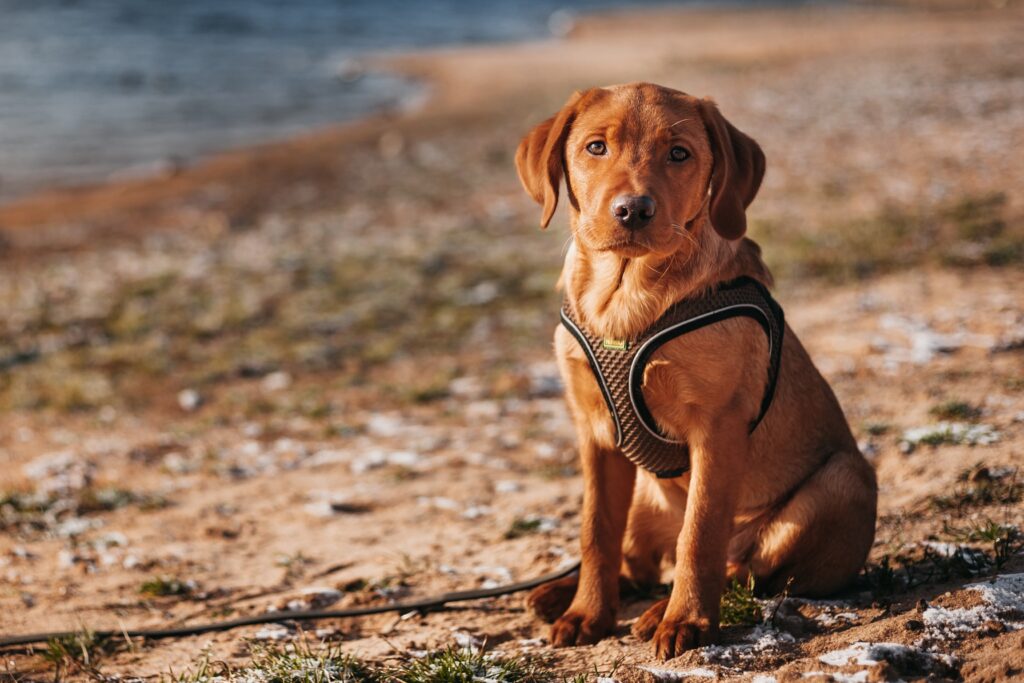
If your puppy starts pulling or losing focus, that’s your cue to make things easier—not harder. Move farther away from distractions or return to a quieter space.
Puppy training is all about setting your dog up to succeed, not testing their limits too quickly.
Step 5: Reinforce and Build Consistency
Leash training isn’t a one-and-done skill—it’s something you’ll continue to build over time.
Consistency is key.
Here’s how to reinforce good leash habits:
- Reward often, especially in new environments
- Be consistent with your expectations
- Practice daily, even for just a few minutes
- Keep walks fun and enjoyable
Over time, you can begin to fade treats slightly, but don’t rush this step. Even adult dogs need treats to learn new skills! Food is a currency dogs understand, it’s how we pay them for the work of training!
One of the biggest mindset shifts I encourage as a dog trainer in York PA is this: walks are not just about exercise—they’re a training opportunity.
Every walk is a chance to:
- Reinforce loose leash walking
- Build your relationship
- Practice focus and engagement
Common Leash Training Mistakes to Avoid
Even with the best intentions, it’s easy to fall into a few common traps:
Moving Too Fast
Your puppy needs time to learn. Skipping steps often leads to frustration for both of you.
Inconsistent Reinforcement
If you only reward sometimes, your puppy may struggle to understand what you want.
Using Punishment-Based Methods
These can damage your relationship and create fear or anxiety around walks.
Expecting Too Much, Too Soon
Remember: your puppy is learning about the world for the first time. Be patient.
Why Reward-Based, Positive Reinforcement Dog Training Works
Reward-based training focuses on teaching your puppy what to do, rather than punishing what not to do.
This approach:
- Builds confidence
- Strengthens your bond
- Encourages your puppy to make good choices
- Creates lasting, reliable behaviors
In my experience working with clients in York, PA, puppies trained with positive reinforcement are more engaged, more resilient, and more enjoyable to walk.
Final Thoughts: Enjoy the Process
Leash training isn’t just about getting from point A to point B—it’s about building a relationship with your puppy.
There will be messy moments. There will be days when your puppy seems to forget everything. That’s normal.
Stay consistent. Stay patient. And celebrate the small wins.
With the right approach to puppy training, your puppy will learn that walking with you is the best place to be.
And before you know it, those chaotic puppy walks will turn into calm, enjoyable adventures—whether you’re exploring your neighborhood or strolling through York, PA.
If you’re in York, PA and feeling overwhelmed with leash training, you don’t have to figure it out alone. Our reward-based, positive reinforcement approach to puppy training gives you clear steps, real support, and lasting results.
Reach out today to work with a dog trainer in York PA and start building the walking skills your puppy (and your sanity!) deserve.
Happy training—and enjoy every step of the journey. 🐾
Leave a Reply
feeling frustrated with your dog's behavior on walks?
tired of stressful, reactive walks?
you need this free guide!


